
Blogs
Is Screen Time Really Harming Kids’ Eyes? A Pediatric Ophthalmology View
Introduction
Little faces glow under screen light – game machines, computers, phones, TV sets fill their days. School tasks now live online, fun hides in apps, lessons stream through pixels, adding hours without pause. Worried thoughts creep into bedtime routines: Could all this looking damage young eyes?
It’s hard to give a straight yes or no when looking through a child’s eye doctor’s lens. A children’s eye specialist in Kochi says Most times, staring at screens does not permanently damage healthy eyes, but too much screen use without limits often leads to dryness, tired eyes, sometimes even nearsightedness growing faster. When parents understand the risks of too much screen time harming their child’s eyes, they start making better choices. Over time, these small changes become healthy daily habits.
Table of Contents
- Understanding How Children’s Eyes Develop
- What Happens to the Eyes During Screen Use?
- Digital Eye Strain in Children
- The Link Between Screen Time and Myopia
- Blue Light: Myth vs. Reality
- Warning Signs Parents Should Watch For
- Pediatric Ophthalmologist Recommendations
- How Much Screen Time Is Safe?
- Practical Tips to Protect Your Child’s Eyes
- Conclusion
- FAQs
1. Understanding How Children’s Eyes Develop
Children’s eyes are still developing during the early childhood years. For children’s eyes to develop properly, they need a combination of near vision tasks such as reading and writing, and distance vision tasks, such as outdoor play. Outdoor play, especially exposure to natural sunlight, is crucial for controlling the development of children’s eyes.
When children spend too much time focusing on objects that are near, especially screens, it can impact children’s visual habits and, in turn, eye development.
2. What Happens to the Eyes During Screen Use?
When a child looks at a screen for a long time:
- The child blinks often which can make the eyes feel dry.
- The muscles in the eyes have to stay focused on something that’s close to the face.
- The eyes get exposed to a lot of light.
- The way the child sits often becomes sloppy.
Using screens is different from reading a book because the screens send light into the eyes and this can make the eyes feel tired. The eyes can get really tired, from using screens for a time because the screens are shining light directly into the eyes.
3. Digital Eye Strain in Children
Children frequently experience digital eye strain, also known as computer vision syndrome (CVS), due to their use of electronic devices over extended periods of time. Symptoms include:
- Headaches
- Blurred vision
- Tiredness in the eyes
- Burning or watery eyes
- Neck/shoulder discomfort
4. The Link Between Screen Time and Myopia
Screen Time & Nearsightedness:
You may have noticed that more children are wearing glasses today. Myopia is becoming increasingly common.
Myopia means your child can see things clearly up close, but distant objects like the classroom board or road signs look blurry.
When children spend long hours looking at phones or tablets, their eyes stay focused on nearby objects for too long. Over time, this constant “close-up” work may increase the risk of blurry distance vision.
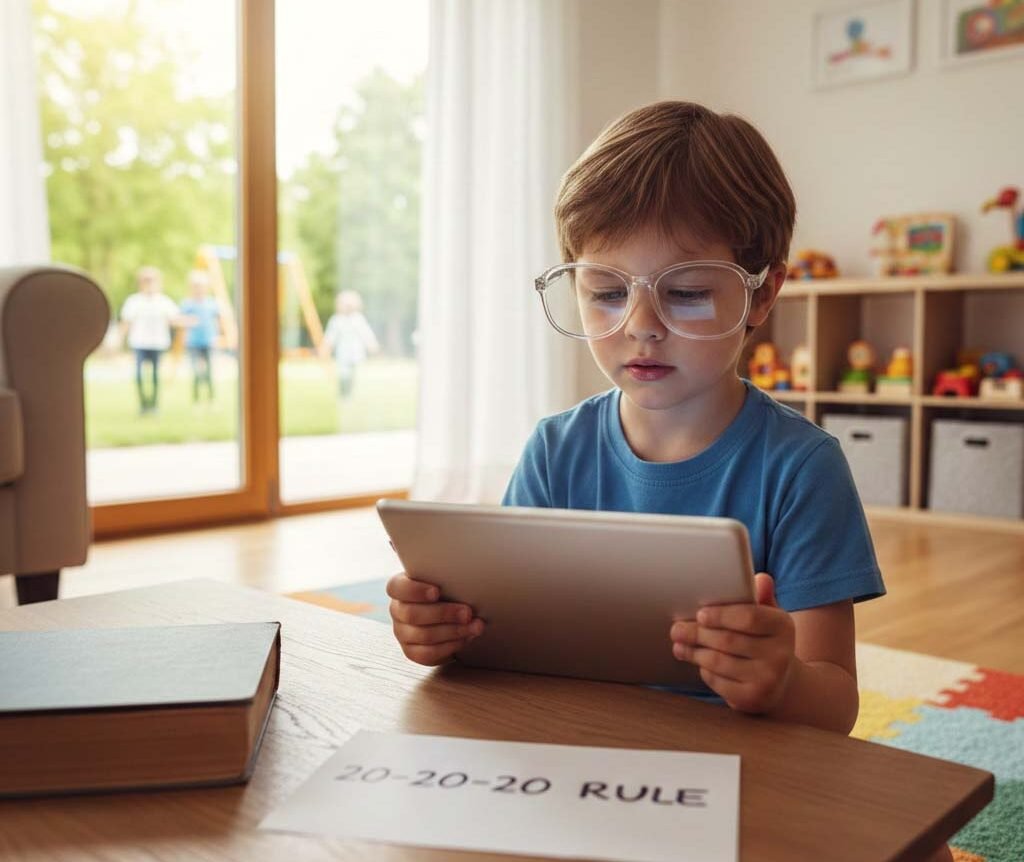
The good news is that outdoor time helps. Children who play outside for at least one to two hours a day are less likely to develop myopia. Looking at distant objects gives the eyes a healthy break, and following the 20-20-20 rule. The rule is to take a 20-second break every 20 minutes to look at something 20 feet away.
Screens alone don’t usually cause permanent damage, but balancing screen time with outdoor play can make a big difference in protecting your child’s vision.
5. Blue Light: Myth vs. Reality
Most parents are concerned with screen blue light. Here’s what experts say:
The blue light of digital equipment is significantly less compared to the sun.
Screen blue light does not have strong scientific evidence of permanently damaging the eyes of children.
Sleep cycles might be disrupted by the use of screens during the night.
Therefore, as much as blue light is not ruining eyesight, it is still important to limit the use of screens at night.
6. Warning Signs Parents Should Watch For
Think about taking your child for a professional eye check-up if they:
- Squints a lot
- Says they have headaches
- Holds devices really close.
- Rubs eyes a lot
- Having a hard time keeping up with school work
- Stays away from outdoor activities
Finding vision problems early is very important for managing them effectively, and a qualified children’s ophthalmologist can help detect and treat issues before they become more serious.
7. Pediatric Ophthalmologist Recommendations
Groups such as the American Academy of Pediatrics and the American Academy of Ophthalmology recommend
- Limiting screen time based on age
- Encouraging daily outdoor play
- Glance twenty feet ahead every now and then – spend half a minute doing it. After twenty minutes pass, shift your eyes off the screen. Give them a rest that lasts twenty seconds. Repeat this whenever time adds up. Distance helps, even if just for short breaks. Twenty feet makes a difference when you pause like clockwork
- Ensuring proper lighting and posture
- Scheduling regular eye exams
Consult the best pediatric ophthalmologist for personalized guidance.
8. How Much Screen Time Is Safe?
Here are some general guidelines to consider:
- Under 2 years: It’s best to don’t give them devices
- Ages 2 to 5: Limit it to just 1 hour per day
- For children 6 and above : Set consistent limits while ensuring they engage in a variety of activities.
Remember, the quality of the content and taking breaks is even more important than just counting the total hours spent in front of a screen.
9. Practical Tips to Protect Your Child’s Eyes
There are many things that parents can do to help protect their children’s eyes, such as:
- Encouraging children to engage in at least 1-2 hours of outdoor activity each day.
- Limiting screen distance to at least arms length.
- Adjusting screen brightness to the surrounding room’s lighting.
- Avoiding screen time for at least one hour prior to going to sleep.
- Ensuring good posture while using screens (sitting rather than lying down).
- Remember to have an annual eye examination performed.
These simple adjustments to your child’s routine can have a tremendous effect on their eye health!
Conclusion
As parents, we all want the best for our children, especially when it comes to their health. While screens are now a part of everyday life, too much screen time can lead to tired eyes, dryness, poor sleep, and even blurry distance vision over time.
The good news is that small, mindful changes can protect their growing eyes. Encouraging outdoor play, setting simple screen limits, and keeping up with regular eye check-ups can make a lasting difference.
When parents stay aware and act early, they’re not just managing screen time; they’re protecting their child’s ability to see the world clearly, confidently, and comfortably for years to come.
What matters most is catching issues before they grow.
Visit KPM Eye Hospital in Kochi, and give your little one the protection their eyes truly need.
YOUR EYES DESERVE THE BEST CARE.
Frequently Asked Questions
1. Can screens permanently damage my child’s eyesight?
2. Do blue light glasses help children?
3. How can I reduce digital eye strain at home?
4. At what age should children have their first eye exam?
5. Is outdoor play really that important for eye health?
Author

K P M Eye Hospital, situated at M G Road, Kochi, Kerala is a super speciality eye hospital providing a wide range of complete eye treatments under one roof. Our motto is to provide best, comprehensive and affordable eye care with the latest comprehensive technologies. We are committed to achieve and maintain excellence in eye care.
